CORE PRINCIPLES
|
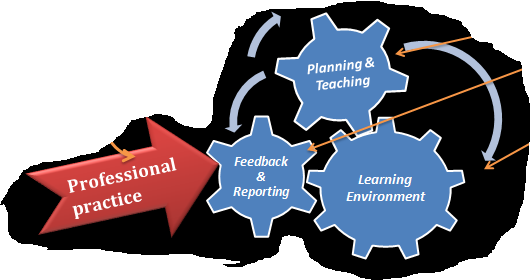
STANDARDS FOR ENTRY TO THE REGISTER
for Professional Practice
1. Planning & Teaching
2.
Feedback & Reporting
3.
Learning Environment |
2. Professional Practice
|
1. Planning & Teaching (page 10)
Teachers plan and implement teaching strategies for successful learning experiences
-
Employ a range of teaching and learning resources and strategies to actively engage all learners and address their interests, learning needs and learning preferences
-
Demonstrate and ability to plan experiences for in-depth learning and to cater for individuals and groups of learners
-
Recognise a learner’s specific learning needs and seek specialised support
-
Demonstrate an ability to plan and manage inquiry-based learning
-
Establish challenging and achievable learning goals within relevant curriculum frameworks
-
Demonstrate skills in negotiating and scaffolding learning experiences to support learners to be successful
-
Employ a range of strategies that help develop learners’ personal and group identity
-
Display an understanding of the importance of fostering learners’ creativity and optimism in shaping the future for themselves
-
Demonstrate an ability to gather, analyse and use relevant strategies, tools and criteria to evaluate learner progress and plan teaching and learning
|
|
2.
Feedback & Reporting (page 11)
Teachers assess and report learning outcomes
-
Negotiate, use and reflect on a range of assessment strategies, tools and criteria to evaluate learner progress and plan teaching and learning
-
Gather evidence of learning in a variety of ways, monitor progress and maintain accurate records
-
Demonstrate a capacity to provide meaningful, respectful, explicit and timely feedback to learners and parent/caregivers
-
Report on progress to learners and parent/caregivers, using a range of communication and reporting strategies, both formal and informal
|
|
3.
Learning Environment (page 12)
Teachers create a safe, challenging and supportive learning environment
-
Demonstrate an ability to establish clear expectations for learners, their behaviour and interactions within the learning environment, consistent with broader behaviour management policies
-
Establish enriching and safe learning environments that support and challenge learners, using a range of flexible learning styles, materials, resources and physical space
-
Demonstrate skills in meeting expectations for learner wellbeing, and work within legislative and other broader requirements
-
Utilise a variety of strategies to provide positive, challenging and inclusive learning environments that enable learners to fully participate in their learning
-
Establish learning environments where diversity is valued and individual differences are respected
-
Create supportive environments in which learners can respectfully express their views
-
Create inclusive learning environments in which learners are supported to develop personal identity, a positive self-image, self-esteem and a positive understanding of others
|
